
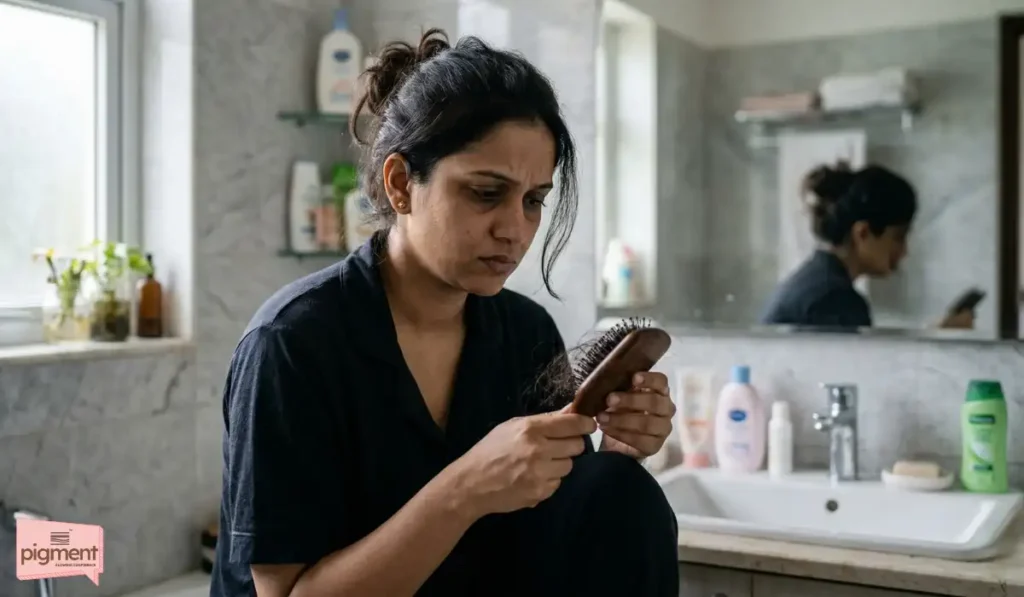
Welcoming a newborn is a monumental milestone, but the sudden physical changes that follow can severely drain your confidence. You are likely dealing with clumps of hair in the shower drain, stubborn dark patches on your cheeks, and laxity across your abdomen. The commercial beauty industry preys on new mothers by selling useless gummies and topical creams. You do not need another marketing gimmick. You need a structural, medical-grade reset. Our board-certified dermatologists in Bangalore have developed specialized clinical protocols to aggressively treat postpartum alopecia, melasma flares, and stretch marks simultaneously.
Understanding Postpartum Hair Loss: The Biological Truth
Before you panic about going bald, you must understand the exact biological shift happening in your scalp. During pregnancy, elevated estrogen levels freeze your hair follicles in the growth phase. You experience thicker, fuller hair for nine months. Once you deliver, those hormone levels plummet. This shock forces up to sixty percent of your hair into a resting phase simultaneously. To stop the shedding, you must stop relying on over-the-counter quick fixes and start treating the follicle at a cellular level. Clinical data proves that targeted intervention is the only way to accelerate the regrowth phase.
The Timeline of Telogen Effluvium
Knowing exactly what to expect biologically will save you from severe anxiety. You need to map out your shedding timeline to understand when clinical intervention becomes absolutely necessary. We educate every new mother in our clinic on this exact cycle to prevent them from misdiagnosing their condition.
When Does Postpartum Hair Loss Start?
The massive hormonal drop does not cause immediate shedding on the day of delivery. You will typically notice when postpartum hair loss starts around three to four months after giving birth. The hairs that were artificially kept alive during pregnancy suddenly detach from the root.
How Long Does Postpartum Hair Loss Last?
Patients constantly ask how long does postpartum hair loss last and when they will see normal volume again. For most women, the aggressive shedding peaks at the four-month mark and gradually slows down. However, you will not see full density return without medical stimulation for up to a year.
When Does Postpartum Hair Loss Stop Naturally?
If your shedding continues heavily past your child’s first birthday, you are no longer dealing with standard hormonal adjustments. You must book a clinical consultation immediately. Once you pass the twelve-month mark, you are likely suffering from underlying nutritional deficiencies or thyroid dysfunction that requires prescription medication.
Why Commercial "Postpartum Hair Loss Remedies" Fail
The internet is flooded with ineffective postpartum hair loss remedies designed to separate exhausted mothers from their money. You must protect your wallet and your scalp by understanding the limitations of commercial products. Our clinic regularly treats women who wasted thousands of rupees on viral trends while their follicles slowly died.
The Reality of Postpartum Hair Loss Shampoo
A postpartum hair loss shampoo is nothing more than a cosmetic cleanser. You should never rely on shampoo to regrow hair. Shampoo sits on your scalp for two minutes and gets washed down the drain. It cannot penetrate the dermal layer to stimulate a dying hair follicle.
The Limit of Supplements for Postpartum Hair Loss
While checking your iron and Vitamin D levels is critical, generic supplements for postpartum hair loss are rarely the magic cure. Over-the-counter biotin gummies do not control hormonal shedding. You must rely on targeted blood panels and prescribed medical-grade nutrition to actually move the needle on your recovery.
Stop Wasting Money on Weak Shampoos
Are you shedding more than 100 hairs a day? Chat with our board-certified dermatologists to find out if you need advanced clinical intervention to save your follicles.
Chat with Our Hair Loss ExpertsClinical Solutions for Severe Postpartum Hair Loss
When your hair volume drops by fifty percent, patience is no longer a viable strategy. You need a highly aggressive severe postpartum hair loss treatment to forcefully restart the growth cycle. Our dermatologists utilize advanced regenerative medicine to bypass the surface and directly inject growth factors into your dormant follicles.
Advanced Hair Fall Treatments
To achieve rapid regrowth, you must utilize therapies that harness your body’s own healing mechanisms. You should upgrade from pharmacy drops to direct clinical injections. We have successfully restored the hair density of hundreds of new mothers in Bangalore using these exact protocols.
Platelet-Rich Plasma (PRP) Therapy
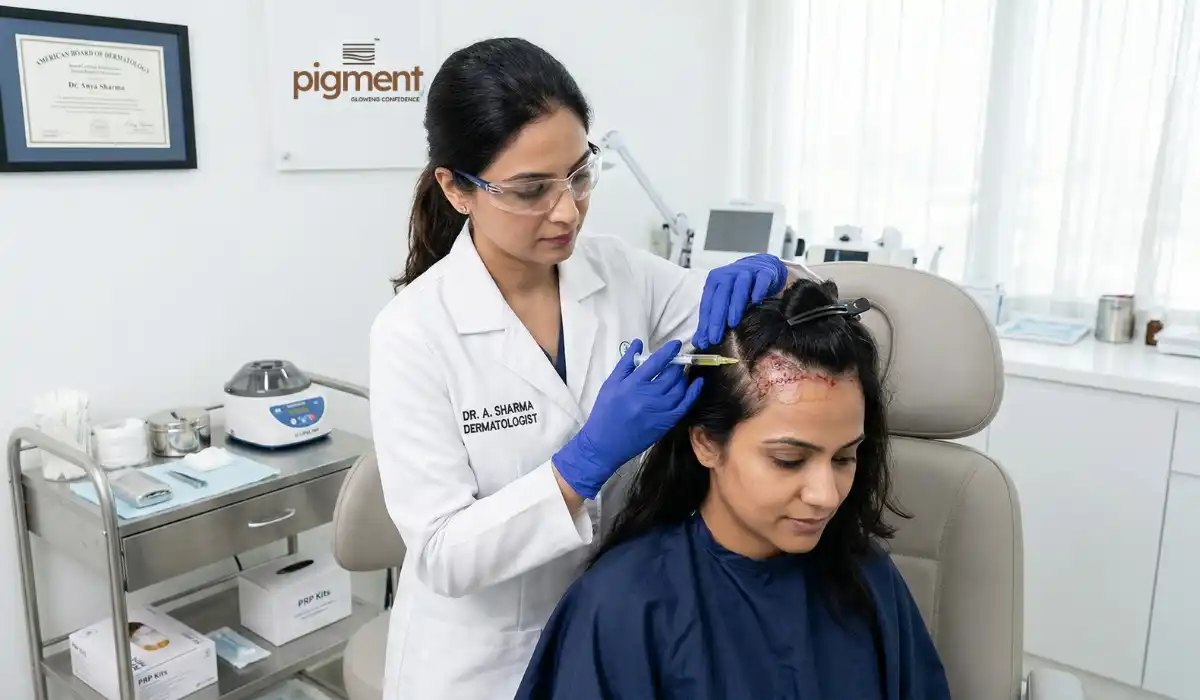
If you want to know how to control postpartum hair loss quickly, PRP Therapy is the gold standard. We draw a small amount of your blood, isolate the nutrient-rich platelets, and inject them directly into your scalp. This floods your dormant follicles with massive amounts of growth factors, forcing them out of the shedding phase and back into active growth.
Growth Factor Concentrate (GFC)
For patients needing a more concentrated intervention, we offer GFC. This is a highly purified, acellular derivative of PRP. It delivers a mathematically precise dose of growth factors without any red or white blood cells, ensuring zero inflammation and maximum follicular stimulation.
Tackling Post-Pregnancy Skin Changes
Your hair is not the only tissue that suffers from a hormonal crash. You must also address the severe structural changes to your skin. From hyperpigmentation to deep dermal tearing, your body requires clinical collagen stimulation to heal properly. We bundle these specific skin therapies with our hair restoration protocols to provide a complete “Mommy Makeover.”
Reversing the “Pregnancy Mask” (Melasma)

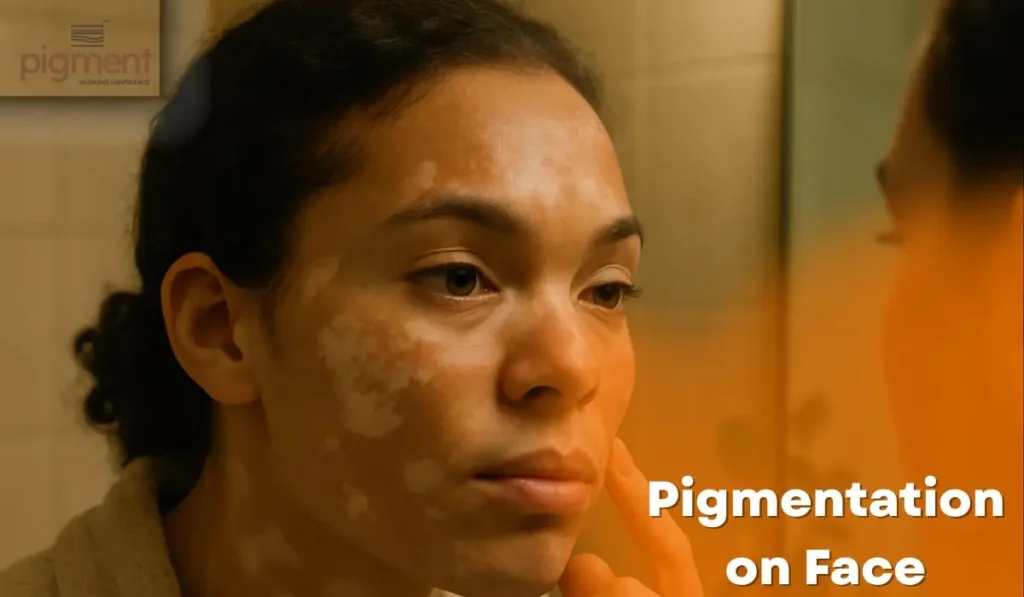
The massive surge in estrogen and progesterone during pregnancy often triggers severe hyperpigmentation across the cheeks, forehead, and upper lip. You cannot scrub this away with a physical exfoliant. You must use targeted energy devices to shatter the deep pigment. Our melasma treatment protocols utilize Q-Switched lasers to safely destroy the melanin clusters without causing rebound hyperpigmentation.
Repairing Abdominal Skin Laxity and Stretch Marks
As your abdomen expands rapidly during pregnancy, the deep dermal collagen tears. This results in red, purple, or silvery stretch marks and severe skin laxity. You must utilize controlled thermal trauma to rebuild this broken matrix. We highly recommend microneedling radiofrequency (MNRF). The gold-plated needles deliver heat deep into the dermis to physically shrink the tissue and build fresh, tight collagen across your abdomen.
Your Clinical Recovery Blueprint
Motherhood changes your body, but you do not have to accept severe hair thinning and permanent pigmentation as your new normal. Stop relying on weak pharmacy shampoos and internet remedies. By trusting medical-grade technology and proven regenerative therapies, you can forcefully reclaim your skin texture and hair density.
Book Your Post-Pregnancy Reset
Ready to restore your hair density, clear your melasma, and tighten your skin? Bundle your treatments with our comprehensive postpartum clinical protocols.
Book Your Clinical Consultation NowFrequently Asked Questions
Q1. How long does postpartum hair loss last?
Ans: Postpartum hair loss typically lasts between three to six months. The heavy shedding usually peaks around the fourth month after delivery. If you continue to experience severe hair fall after your child turns one, you should consult a dermatologist for advanced clinical treatments like PRP.
Q2. What is the best postpartum hair loss treatment?
Ans: The most effective clinical treatment for severe postpartum hair loss is Platelet-Rich Plasma (PRP) therapy. Unlike cosmetic shampoos, PRP injects your own concentrated growth factors directly into the scalp. This physically forces dormant hair follicles out of the resting phase and back into active growth.
Q3. When does postpartum hair loss start?
Ans: Postpartum hair loss does not begin immediately after birth. Most new mothers will notice the sudden onset of heavy shedding around three to four months postpartum. This delay occurs because it takes time for the abrupt drop in pregnancy hormones to push the hair follicles into the shedding phase.
Q4. Can supplements cure postpartum hair loss?
Ans: Standard biotin supplements and vitamins cannot cure hormonally driven postpartum hair loss. While maintaining good iron and Vitamin D levels is important for overall health, you need clinical interventions like GFC or PRP to actively stimulate dying follicles and accelerate new hair density.
Q5. How can I treat pregnancy melasma safely?
Ans: Pregnancy melasma, often called the “mask of pregnancy,” is best treated clinically using Q-Switched lasers and chemical peels. These treatments safely shatter deep pigment clusters without damaging the surrounding tissue. You should always wait until after you have finished breastfeeding to begin aggressive laser protocols.