
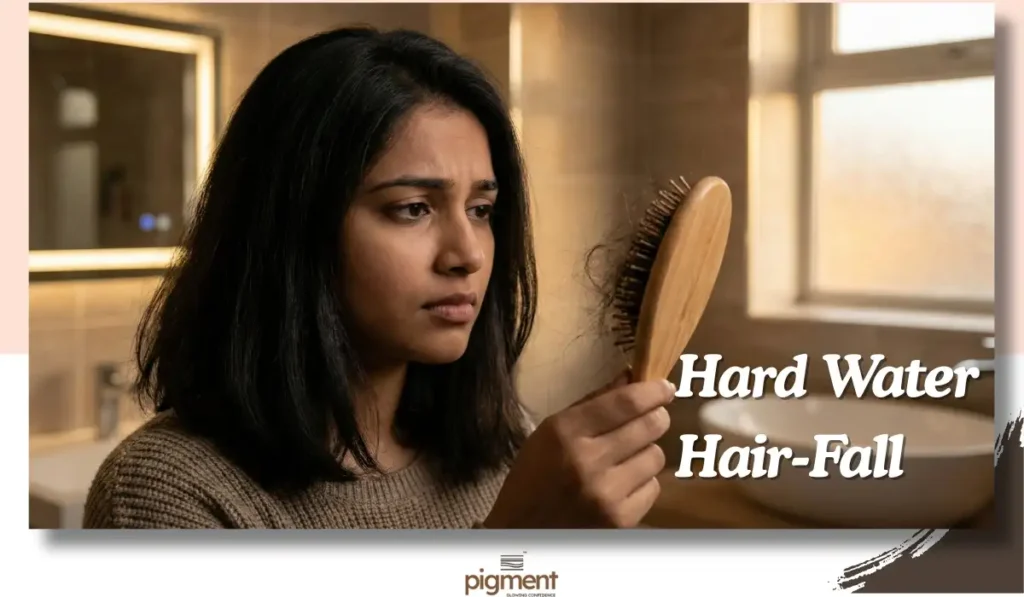
It is the unofficial welcome gift of the city. You move to Bangalore for the weather, the career growth, or the vibrant startup culture. You love the dosa places in Indiranagar and the breweries in Koramangala. But within three months of unpacking your bags, you notice something alarming.
The shower drain is clogged. Your hairbrush is full. And your once-smooth hair feels dry, frizzy, and unmanageable.
If you are living in areas like Whitefield, Sarjapur, or Electronic City, you likely blame one culprit: The Water.
“Hard water hair fall” is the number one complaint we hear at our clinic. But is the borewell water actually making your hair fall out, or is it just damaging the texture? More importantly, will a water softener fix it, or do you need a medical treatment?
We are breaking down exactly what Bangalore’s water does to your hair and how to fix it effectively.
The Science: What is “Hard Water” Doing to Your Hair?
To solve the problem, you first need to understand the chemistry. Bangalore depends heavily on groundwater (borewell water) and tanker water supply. This water is rich in minerals, specifically calcium and magnesium.
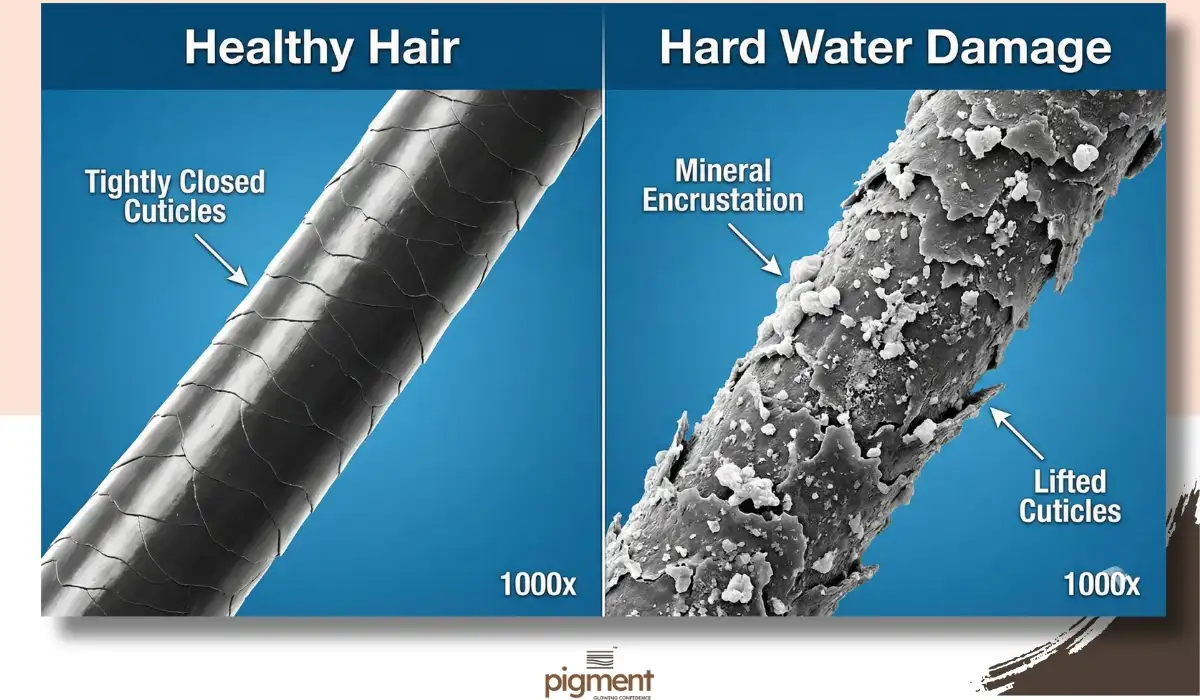
When you wash your hair with hard water, these minerals do not simply wash away. They react with your shampoo to form a “scum” or salt deposit that sticks to your hair shaft. This process is called calcification.
Imagine a layer of chalk coating each strand of your hair. This mineral buildup does three things:
- It blocks moisture from entering the hair strand.
- It lifts the hair cuticle, making the surface rough and frizzy.
- It adds weight, making hair look flat and limp.
The Critical Distinction: Breakage vs. Shedding
This is where most people get confused. You need to know if you are experiencing Hair Breakage or Hair Loss.
- Hair Breakage (The Hard Water Effect): The mineral buildup makes your hair dry and brittle. When you comb it, it snaps mid-shaft. If you look closely at the fallen hair, there is no white bulb at the end. It is just a broken piece.
- Hair Shedding (The Root Issue): This is when the hair falls out from the scalp. If you see a tiny white bulb at the end of the fallen strand, the hair has detached from the follicle.
Hard water primarily causes breakage. It ruins the quality of the fiber. However, if you are losing hair from the root, the water might be a trigger, but it is rarely the only cause.
If you are unsure whether your hair fall is normal or alarming, checking our guide on 10 Signs You Should See a Dermatologist in Bengaluru can help you spot the red flags early.
3 Ways to Protect Your Hair from Borewell Water
If your main issue is dryness, frizz, and breakage, you can often manage this at home by changing your shower routine.
1. The “Chelating” Shampoo Reset
Regular shampoos are not strong enough to remove mineral buildup. You need a Chelating Shampoo. These shampoos contain ingredients like EDTA that act like tiny magnets. They grab the calcium and magnesium deposits off your hair and wash them away.
Using a chelating shampoo once a week can instantly make your hair feel lighter and softer.
2. The Final Rinse Technique
This is the most cost-effective hack. After you finish your shower, do not let the tap water be the last thing that touches your hair.
Use a mug of filtered drinking water (RO water) for your final rinse. This washes away the mineral residue before it dries on your scalp. You can also add a teaspoon of Apple Cider Vinegar to this water to balance the pH levels and smooth down the hair cuticle.
3. Install a Shower Filter
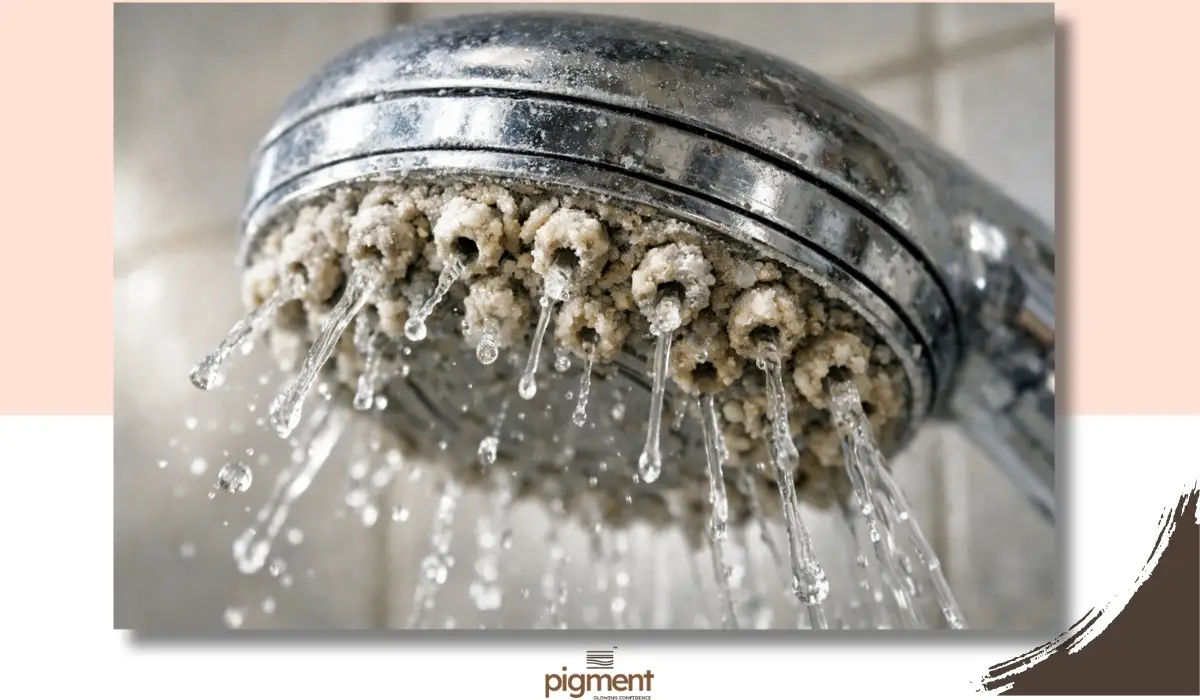
Shower and tap filters have become a standard appliance in Bangalore bathrooms. While they are helpful, it is important to manage your expectations.
Most basic shower filters remove chlorine and sediments (mud), which is great. However, they often cannot lower the TDS (Total Dissolved Solids) or “soften” the water completely unless you install a large, expensive whole-house softening unit. They are a good first step, but they are not a magic cure.
“I Fixed the Water, But I’m Still Losing Hair”
This is a common scenario. You installed the filter. You bought the expensive shampoo. You even started drinking more water. But the hair fall continues.
Why?
Because living in Bangalore affects your hair in more ways than just the water supply.
The “Tech City” Lifestyle Factors
- Vitamin D Deficiency: Most of us work indoors in air-conditioned tech parks or offices from 9 AM to 7 PM. We rarely see the sun. Vitamin D is crucial for the hair growth cycle, and deficiency is rampant here.
- Stress: The high-pressure startup culture and traffic stress lead to cortisol spikes. High cortisol forces hair follicles into a resting phase, leading to shedding months later.
- Dietary Shifts: Relying on food delivery apps instead of home-cooked meals often leads to a lack of iron and protein.
If you are experiencing thinning roots or a widening partition, no amount of water filtering will help. You need to treat the internal cause.
For men noticing a receding hairline along with the fall, ignoring it can lead to permanent balding. We recommend reading about laser hair removal for men in Bangalore, where we also discuss grooming and maintenance for healthy hair growth.
Medical Treatments for “Root” Problems

When the issue is internal, you need a dermatologist, not a plumber.
If your scalp is visible or the density has reduced significantly, we look at regenerative treatments. One of the most effective options available right now is using your body’s own growth factors to stimulate the follicles.
Many patients ask us about the difference between older PRP methods and the newer GFC technology. We broke down the efficiency and results of both in our detailed comparison: PRP vs GFC Hair Treatment in Bengaluru: Which Works Best?
For those whose hair quality is damaged beyond repair; meaning it feels like straw and breaks when you touch it sometimes you need an intense external rescue before you can worry about growth. In these cases, treatments like hair Botox in Bengaluru can restore the texture and stop the breakage immediately.
Unsure if it’s the Water or Your Health?
Don't waste money on filters if the problem is genetic. Chat with our team to describe your symptoms, and we will guide you on whether you need a plumber or a dermatologist.
Chat with an Expert: Is it Water or Roots?The Verdict: Do You Need a Filter or a Doctor?
Here is a simple checklist to help you decide your next step.
It is likely just the WATER if:
- Your hair feels rough, dry, and tangles easily.
- You see short, broken pieces of hair on your pillow.
- Your skin feels dry and itchy after a shower.
- The hair fall stops when you travel to a different city.
It is likely a MEDICAL ISSUE if:
- You see long, full strands falling with a white bulb attached.
- Your ponytail is getting thinner.
- You can see more of your scalp than before.
- You have a family history of balding.
- You have been stressed or sick recently.
Conclusion
Do not let Bangalore’s water take the blame for everything. While hard water definitely damages hair texture and causes breakage, it is rarely the sole cause of severe hair loss.
Start by fixing your shower routine with a filter and a chelating shampoo. If the hair fall persists after four weeks, it is time to look deeper.
Whether it is genetic hair loss, stress-induced shedding, or just severe environmental damage, we can help you find the root cause. Don’t guess with your hair health.
Stop Guessing. See the Root Cause.
A simple visual check isn't enough. Our Microscopic Scalp Analysis reveals what the naked eye can't see; distinguishing between hard water breakage and root shedding in minutes.
Book Microscopic Scalp Analysis (Check Root Health)Frequently Asked Questions (FAQ)
Q1. Which shampoo is best for hard water hair fall?
Ans: Look for “Chelating Shampoos” or “Clarifying Shampoos.” Key ingredients to look for on the label are Disodium EDTA or Tetrasodium EDTA. These bind to the minerals and wash them away. Brands like Iluvia or Pantene have specific hard water ranges available in India.
Q2. Can hard water cause permanent baldness?
Ans: No, hard water alone typically does not cause permanent baldness (Androgenetic Alopecia). It causes breakage and thinning of the hair shaft. However, the stress on the hair can worsen existing hair loss conditions.
Q3. Does boiling water remove hardness?
Ans: Boiling water can remove “temporary hardness” (bicarbonates) but it does not remove “permanent hardness” (calcium and magnesium sulfates). It is also not a practical daily solution for bathing. Using an RO rinse is more effective.
Q4. How do I know if I need GFC or just a better conditioner?
Ans: If your problem is frizz and dryness, a deep conditioner or Hair Botox will help. If your problem is reducing volume and seeing your scalp, you likely need a growth treatment like GFC. Read our guide on Hair Loss in Women to understand the treatment options better.
Q5. Is borewell water worse than Kaveri water for hair?
Ans: Generally, yes. Borewell water in Bangalore tends to have significantly higher TDS (Total Dissolved Solids) levels compared to Kaveri water, making it “harder” and more damaging to hair texture.