
Alopecia Treatment in Bangalore: Autoimmune vs Pattern Baldness

Pigment Skin & Hair Clinic

Alopecia Treatment in Bangalore: Diagnosing Autoimmune vs. Pattern Baldness

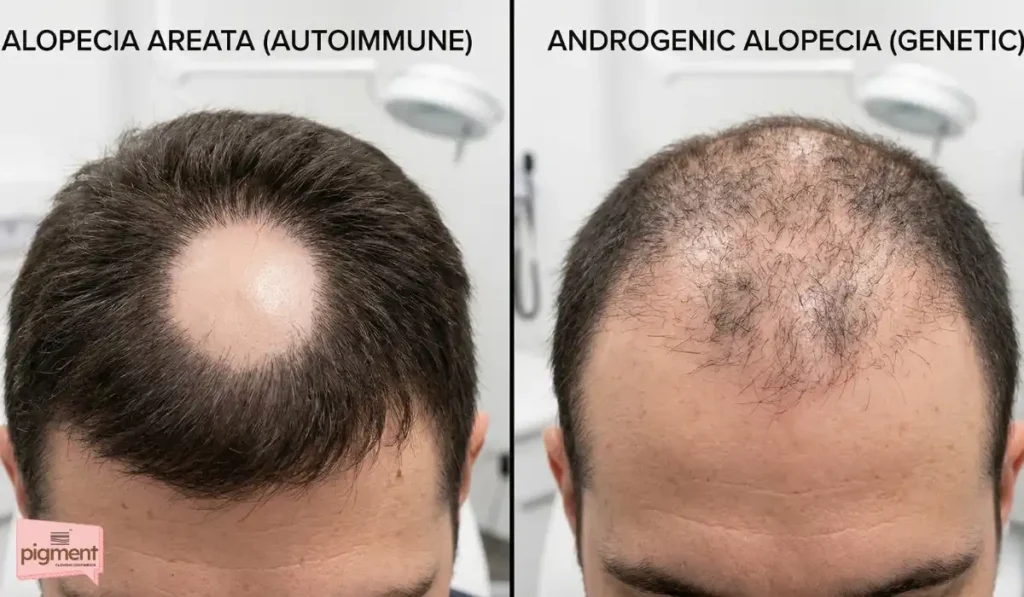
Comparing alopecia areata patches versus androgenic alopecia genetic thinning.

You just found a smooth, coin-sized bald spot on your scalp. Your immediate instinct is to panic and buy an expensive hair growth serum. Stop right there. Applying cosmetic drops to an autoimmune condition is a guaranteed way to lose that hair permanently. At our Pigment Skin & Hair Clinic, we see patients every week who misdiagnose their shedding and waste critical months on the wrong therapies. Before you search for an alopecia treatment, you must understand exactly what is attacking your hair follicles. Our board-certified dermatologists have built this guide to help you identify the root cause of your hair loss and find the right medical protocol.

The Danger of Self-Diagnosing Hair Loss

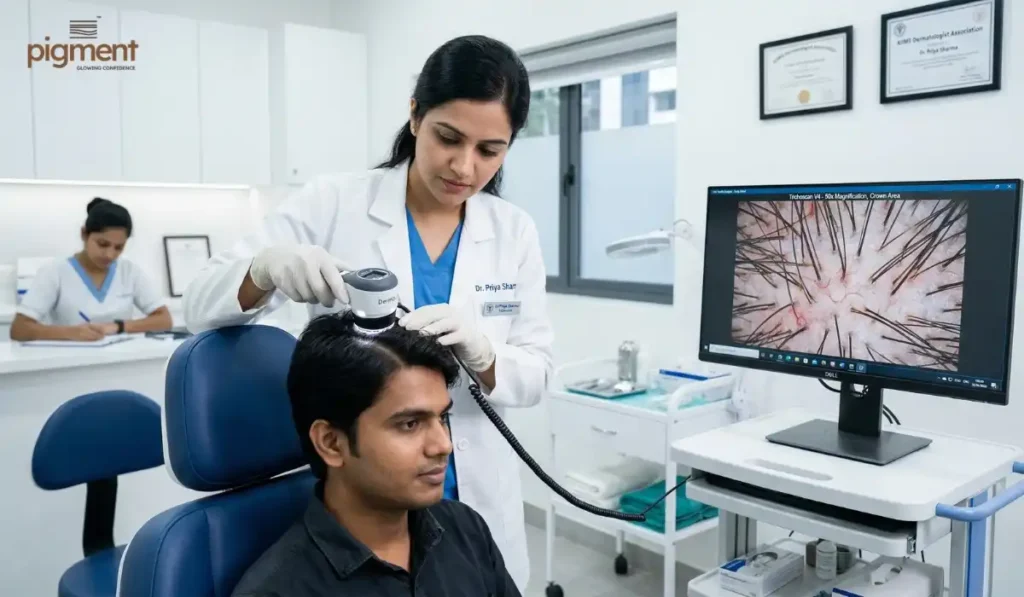
Dermatologist performing a digital trichoscopy scalp assessment for alopecia treatment in Bangalore.

Not all hair loss is created equal. You cannot treat an immune system malfunction with the same tools you use for a genetic sensitivity. When you try to guess your diagnosis, you give the underlying disease more time to destroy the follicle permanently.

Our clinical team uses digital trichoscopy to view your scalp at a microscopic level. This advanced diagnostic tool allows us to see exactly whether your white blood cells are attacking the root or if hormones are slowly shrinking it. Getting this diagnosis right on day one dictates whether your hair grows back or dies permanently.

Alopecia Areata: The Autoimmune Attack

If you suddenly notice perfectly round, smooth patches of hair loss on your scalp or beard, you are likely dealing with Alopecia Areata. This is not a regular shedding cycle. This is an internal malfunction where your immune system mistakenly identifies your hair follicles as foreign invaders and attacks them. The onset is incredibly rapid. It often happens over a few short days. Finding the best treatment for alopecia areata requires suppressing this localized immune response immediately before the patch expands.

Why an “Alopecia Treatment at Home” Will Fail

Thousands of people search for an alopecia treatment at home to fix these bald patches naturally. They rub onion juice, garlic, or an over-the-counter alopecia areata treatment cream directly onto the spot.

You must understand that these surface-level cosmetics cannot stop a cellular immune attack. Relying on an alopecia natural treatment simply allows your white blood cells to continue destroying the follicle unhindered. Medical science proves that topical cosmetics do not penetrate deep enough into the dermis to alter your immune system. You need a medical intervention, not a kitchen remedy.

Stop Guessing Your Diagnosis

Are you dealing with sudden bald patches or gradual thinning? Stop wasting time on home remedies. Chat with our board-certified dermatologists to get a highly accurate medical diagnosis today.

Chat with Our Hair Loss Experts

Androgenic Alopecia: Genetic Pattern Thinning

Do not confuse sudden bald patches with standard genetic thinning. If you are experiencing a slow, receding hairline or a widening part line over several years, you are dealing with Androgenic Alopecia.

This condition is driven by a genetic sensitivity to DHT. This hormone slowly miniaturizes the follicle over time until it stops producing hair completely. Finding an effective androgenic alopecia treatment focuses on blocking this hormone and rebuilding the shrunken root. If your hair is slowly receding rather than falling out in sudden patches, you have likely outgrown basic topical serums. In these cases, you must transition to advanced hair fall treatments like clinical PRP to physically rescue the dying follicles.

What is the Best Treatment for Alopecia?

Patients constantly ask us: what is the best treatment for alopecia? The clinical answer depends entirely on your exact diagnostic results. You cannot use a regenerative therapy to fix an autoimmune disease. You cannot use immune suppressants to fix genetic baldness. We prescribe very specific protocols based on the mechanism of your hair loss.

Clinical Interventions for Alopecia Areata
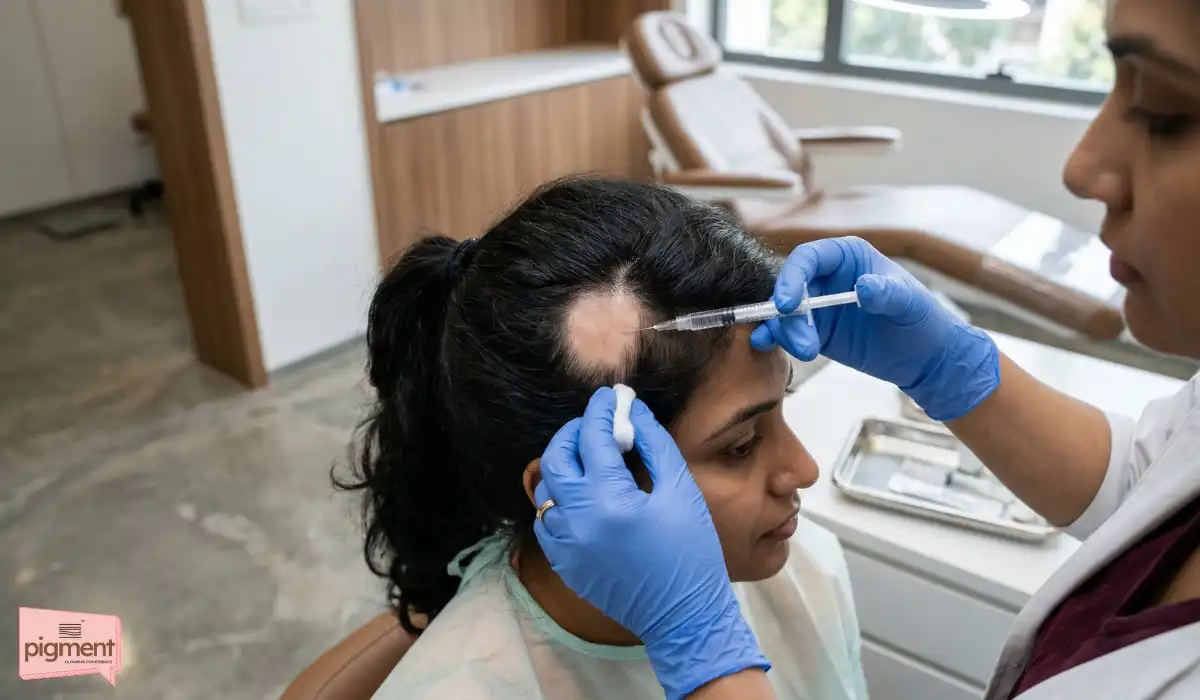
Dermatologist administering intralesional injection for alopecia areata treatment.

For sudden autoimmune patches, the globally accepted dermatological standard is intralesional corticosteroid injections. We inject a highly specific, low-dose anti-inflammatory medication directly into the bald spot. This instantly shuts down the immune attack in that specific area. Once the inflammation is cleared, the hair follicle can recover and start producing hair again within weeks.

Regenerative Therapies for Pattern Baldness

If your trichoscopy points to genetic pattern thinning, we must focus on cellular repair. We utilize advanced regenerative therapies like Platelet-Rich Plasma (PRP) and Growth Factor Concentrate (GFC) to physically rebuild the miniaturized follicles. Because the shedding biology is distinct for each gender, we design specific injection protocols to treat the receding hairlines common in male pattern baldness, as well as the diffuse central thinning associated with female hair loss.
Your First Step: A Clinical Scalp Assessment

You cannot cure a biological problem with guesswork. Every day you wait to get a proper diagnosis is another day your follicles suffer irreversible damage. Stop buying random serums online and hoping for the best.

Your first step must be a professional digital trichoscopy scan. Book a consultation for a targeted alopecia treatment in Bangalore at our clinic today. We will map your scalp, identify the exact mechanism destroying your hair, and build a precise medical protocol to restore your natural density.

Book Your Digital Scalp Scan

Ready to stop the shedding permanently? Visit our clinic for a microscopic trichoscopy scan. We will identify the root cause of your hair loss and prescribe the exact clinical protocol you need.

Book Your Clinical Assessment Now

Frequently Asked Questions: Alopecia Diagnosis & Recovery

Q1. What is the best treatment for alopecia areata?

Ans: The most effective clinical treatment for alopecia areata involves intralesional corticosteroid injections. A board-certified dermatologist carefully injects targeted anti-inflammatory medication directly into the bald patch. This immediately suppresses the overactive white blood cells attacking the hair root, allowing the follicle to heal and resume active hair growth quickly.

Q2. Can an alopecia natural treatment cure bald patches?

Ans: No, a natural treatment cannot cure autoimmune bald patches. Alopecia areata is an internal immune system malfunction. Applying topical ingredients like onion juice or herbal oils only affects the epidermal surface. These remedies cannot penetrate the dermis to stop your immune cells from attacking the hair follicle. Delaying medical intervention simply allows the patches to spread.

Q3. Do over-the-counter alopecia areata treatment creams work?

Ans: Over-the-counter creams are generally ineffective for true alopecia areata. These retail creams are cosmetically formulated and lack the active medical ingredients required to suppress a severe localized immune response. You need prescription-strength medical interventions administered in a clinical setting to successfully halt the shedding.

Q4. How do I know if I need an androgenic alopecia treatment?

Ans: You need an androgenic alopecia treatment if your hair loss is gradual and follows a specific genetic pattern. In men, this looks like a receding hairline and crown thinning. In women, it presents as a widening part line and diffuse central thinning. Unlike the sudden, completely smooth coin-sized patches of alopecia areata, androgenic alopecia is a slow miniaturization process caused by DHT sensitivity.

Q5. How fast does an alopecia treatment in Bangalore show results?

Ans: The timeline for results depends entirely on your exact diagnosis. Patients receiving intralesional injections for isolated alopecia areata patches often see fine hair regrowth within four to six weeks. Patients undergoing regenerative therapies like PRP for genetic pattern baldness typically require three to four monthly sessions before noticing significant structural thickening and increased density.

Scroll to Top