
Laser Hair Removal for PCOS: Does It Actually Work?

Pigment Skin & Hair Clinic

Laser Hair Removal & PCOS: Will It Actually Work on Hormonal Hair?

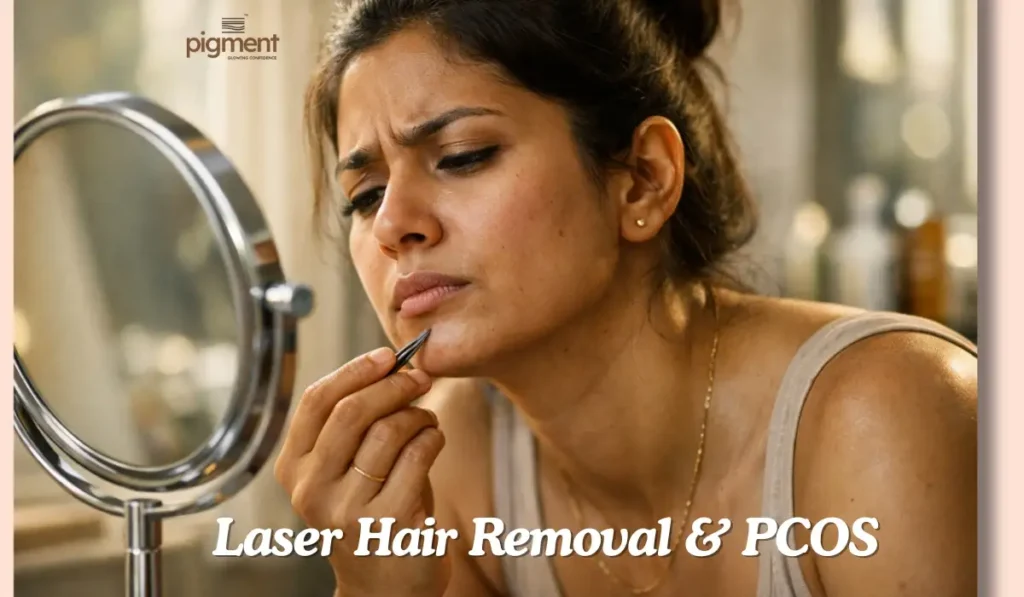
A young Indian woman with PCOS using a magnifying mirror and tweezers to check for facial hair growth in the morning.

For many women, the morning routine does not start with a cup of coffee. It starts with a magnifying mirror and a pair of tweezers.

If you have Polycystic Ovary Syndrome (PCOS), you know the struggle intimately. You check your chin, neck, and sideburns for new growth before you even step out of the house. You might carry a razor in your handbag “just in case” or wear your hair down to hide the shadow on your jawline.

This condition is called Hirsutism (HUR-soot-iz-um), and it affects a significant number of women in Bangalore. While it is a medical symptom, the toll it takes is deeply emotional.

The most common question we hear in our consultation room is not just “Will laser remove this?” but “Will it actually stay gone, or is my body fighting a losing battle?”

In this guide, we are going to be completely honest about what laser hair removal can and cannot do for hormonal hair growth so you can stop the daily struggle and start managing your skin effectively.

The Biology: Why PCOS Hair Is Different
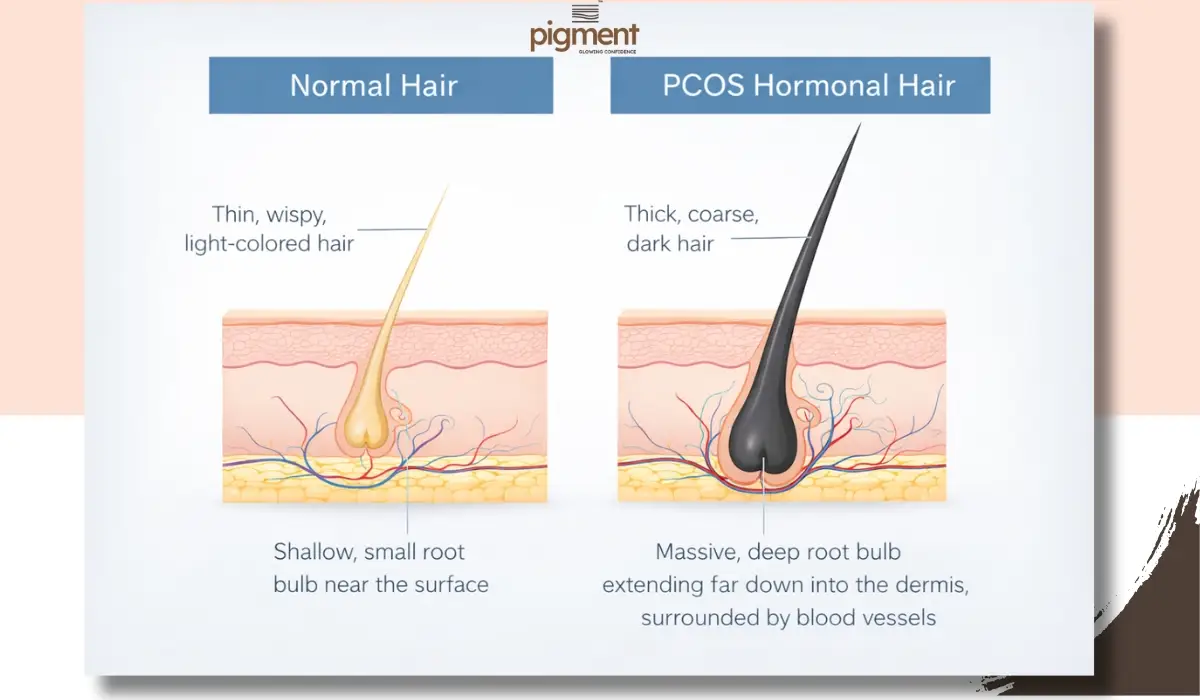
Medical diagram comparing a normal shallow hair follicle versus a deep, thick hormonal hair follicle caused by PCOS.

To understand the treatment, you have to understand the cause. PCOS is a hormonal disorder that often involves higher-than-normal levels of androgens (male hormones like testosterone).

Every woman has these hormones, but when levels are elevated, they act like high-octane fuel for your hair follicles. They turn the fine, invisible “peach fuzz” (vellus hair) on your face, chest, and stomach into thick, dark, coarse hair (terminal hair).

This is why the hair on your chin feels different from the hair on your arm. It is deeper, stronger, and grows back much faster. Because the root cause is internal, treating it requires a stronger external solution.

The Big Question: Does Laser Work on Hormonal Hair?

The short answer is Yes. Laser hair removal is currently the most effective method for managing PCOS-related hair growth.

The honest answer is Yes, but it is different from standard hair removal.

For a client without hormonal issues, laser hair removal might feel like a “cure.” For a PCOS client, laser hair removal is “management.”

The laser energy travels down the hair shaft and destroys the follicle, stopping it from producing hair. However, because your body is constantly producing the hormones that stimulate new growth, your treatment plan will look different in two key ways:

  1. More Sessions: While a standard client might be hair-free in 6 to 8 sessions, PCOS patients often require 8 to 12 sessions to achieve the same level of clearance.
  2. Maintenance is Mandatory: You will likely need “touch-up” sessions. Initially, this might be once every 3 months, eventually tapering off to once or twice a year.

Despite this, the results are life-changing. You go from shaving every morning to having smooth skin for months at a time. The “shadow” under the skin disappears, and the painful ingrown hairs vanish.

If you are worried about the safety of treating your face, read our guide on Permanent Facial Hair Removal in Bangalore: Is Laser Safe for Indian Skin?

Why “Home IPL” Devices Fail PCOS Patients

You have probably seen ads for “at-home laser” devices (which are actually IPL) promising salon results for a fraction of the price.

For women with PCOS, these are usually a waste of money.

Hormonal hair roots are incredibly deep and resilient. Home IPL devices use scattered, low-power light that simply cannot penetrate deep enough to kill a hormonal root. They might “stun” the hair for a few days, but they rarely destroy the follicle.

To treat Hirsutism, you need a medical-grade machine, specifically a Diode or Nd:YAG laser, that delivers high heat directly to the base of the follicle. You need power to overcome the hormonal drive.

Understanding the difference between weak IPL and medical lasers is crucial before you invest. We broke down the technology in detail here: Diode vs. IPL vs. Nd:YAG: Which Laser Technology Actually Works Best?

Worried About Making It Worse?

Treating hormonal hair requires medical expertise, not a salon. Chat with us privately to confirm if your skin type is safe for laser treatment.

Chat with a PCOS Expert (Private & Confidential)

The Risk of “Paradoxical Hypertrichosis”
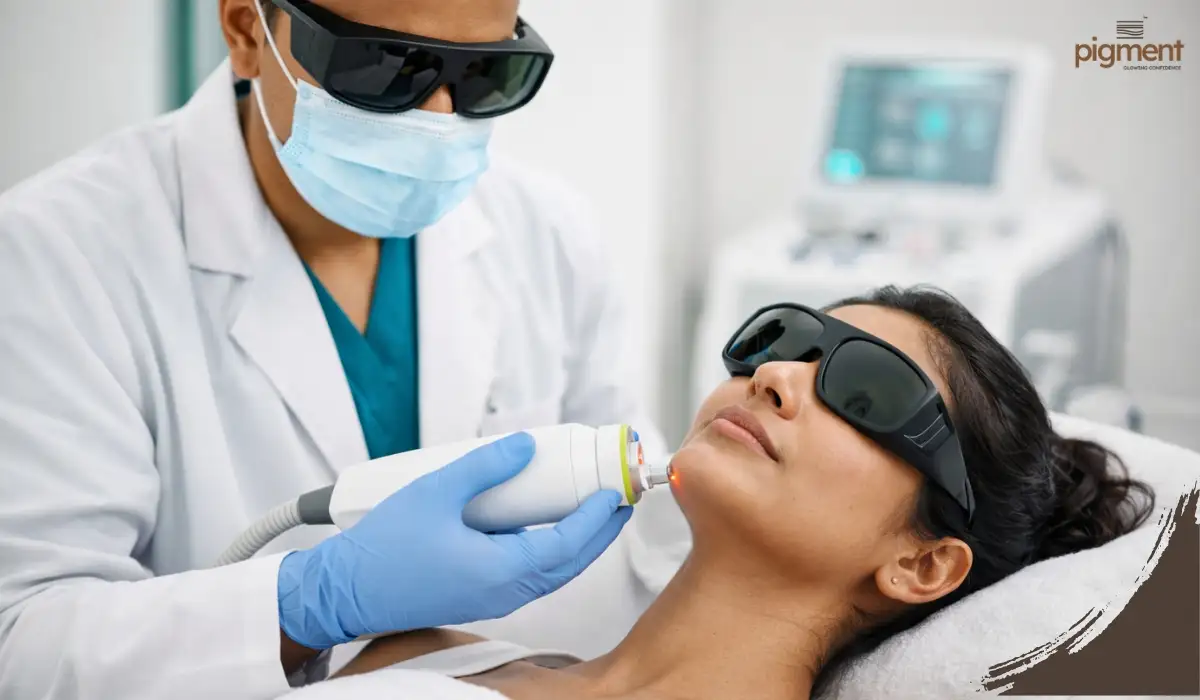
A dermatologist performing safe, medical-grade laser hair removal on a patient's jawline in a Bangalore skin clinic, with both wearing safety gear.

This is a term every PCOS patient should know.

If you use a laser that is too weak (like a home device or a cheap spa machine) or use the wrong settings, the low heat can actually stimulate more hair growth instead of killing it. This is called Paradoxical Hypertrichosis.

This happens when the laser heats the follicle enough to “wake it up” but not enough to destroy it.

This is why seeing a qualified dermatologist is non-negotiable for facial hair. We use specific medical protocols; high energy, short pulse durations to ensure we are destroying the hair, not making it worse.

Choosing a clinic with the right expertise is the single most important step you can take. Check our guide on How to Choose the Best Skin Clinic in Bangalore: 8 Green Flags.
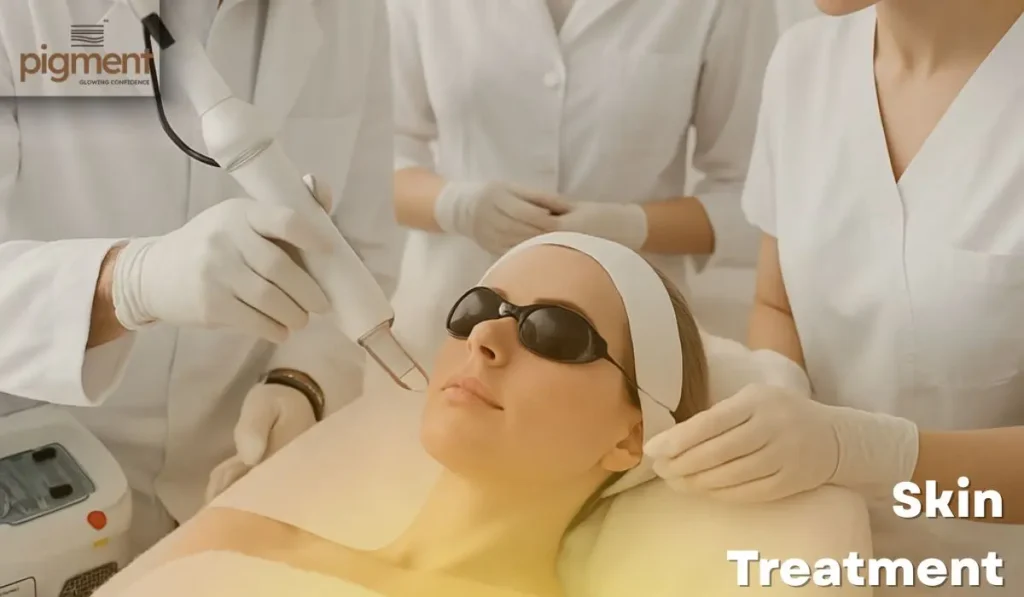
Electrolysis vs. Laser for PCOS

We often get asked if Electrolysis is a better option. Here is the comparison:

  • Electrolysis: A needle is inserted into each individual hair follicle to zap it. It is 100% permanent and works on white or gray hair. However, it is incredibly slow (hair-by-hair) and can be quite painful.
  • Laser Hair Removal: Treats large areas (like the whole chin and neck) in minutes. It offers 80-90% reduction and is far more comfortable.

Our Recommendation: Start with Laser. Use laser to clear the dark, thick bulk of the hair. Once you have achieved 90% reduction, if you have a few stubborn gray or white hairs left, you can use Electrolysis to finish them off.

Insurance and Costs

A common question is: “Will insurance cover laser hair removal for PCOS?”

In India, laser hair removal is classified as a “cosmetic procedure” rather than a medical necessity, even when the underlying cause is a medical condition like PCOS. Therefore, health insurance policies generally do not cover it.

However, when you calculate the lifetime cost of threading, waxing, and razors; plus the time spent worrying about it, laser often proves to be the more economical choice in the long run.

Conclusion: Reclaiming Your Confidence

PCOS is difficult enough without having to worry about your skin every single day.

While laser hair removal is not a magic cure that fixes the internal hormonal imbalance, it is the most powerful tool we have to manage the external symptoms. It offers you the freedom to wake up and start your day without running to the mirror.

You do not have to live with the shadow.

Stop the Daily Struggle. Start Management.

Get a clear, honest breakdown of the cost and timeline for a 12-session hormonal hair management plan designed for PCOS.

Get My PCOS Laser Treatment Plan

Frequently Asked Questions (FAQ)

Q1. How many sessions will I need for PCOS hair removal?

Ans: While the standard is 6 to 8 sessions, women with PCOS typically need 8 to 12 sessions to see significant reduction. We also recommend scheduling maintenance sessions every 3 to 6 months to manage any hormonal regrowth.

Q2. Can I do laser if I am taking PCOS medication?

Ans: Yes. In fact, medications prescribed by your endocrinologist (like oral contraceptives or anti-androgens) often work well alongside laser treatment. They help control the internal hormone levels while the laser handles the external hair.

Q3. Is laser safe for the face?

Ans: Yes, medical-grade diode lasers are safe for facial skin. We use advanced cooling technology to protect the skin surface while targeting the deep roots. This prevents burns and keeps the treatment comfortable.

Q4. Why is my hair growing back after laser?

Ans: If you have PCOS, your body is constantly producing new hair follicles due to hormonal stimulation. “Regrowth” is often actually “new growth.” This is why consistency and maintenance sessions are critical for long-term results.

Q5. Does laser work on the bikini area for PCOS?

Ans: Yes. PCOS often causes hair growth to extend to the inner thighs and bikini line. Laser is highly effective here and also prevents the painful boils and ingrown hairs common in this area. You can read more in our First-Timer’s Guide to Bikini Laser Hair Removal.

Scroll to Top