
Diode vs IPL vs Nd:YAG: Best Laser Hair Removal Technology

Pigment Skin & Hair Clinic

Diode vs. IPL vs. Nd:YAG: Which Laser Technology Actually Works Best for Indian Skin?

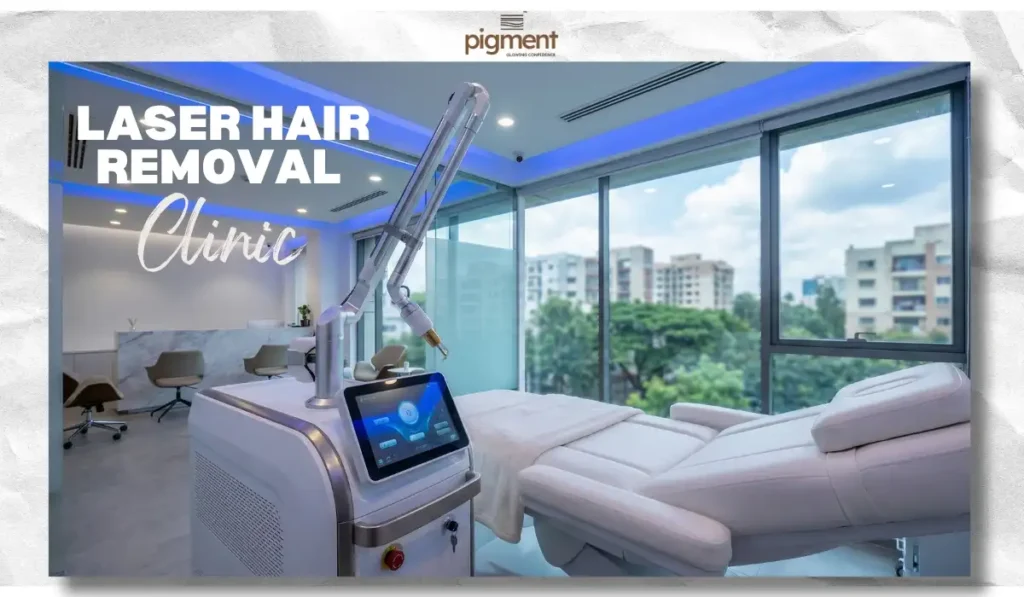
Interior of a modern skin clinic in Bangalore featuring the best laser hair removal technology and medical-grade equipment.

If you have been researching hair removal in Bangalore, you are likely overwhelmed. You scroll through Instagram and see an ad for a full-body package in Koramangala for ₹49,999, and then scroll down to see a “Laser” offer in Whitefield for just ₹499 per session.

How can two treatments that sound exactly the same have such a massive price gap?

The truth is that they are not the same treatment. In the unregulated world of aesthetics, the word “Laser” is used as a catch-all term for anything that flashes light. But for the consumer, the difference between a medical-grade machine and a budget device is the difference between permanent results and years of wasted money.

This guide will strip away the marketing noise. We are going to look at the science behind the three major technologies available in Bangalore clinics—IPL, Nd:YAG, and Diode; so you can decide which best laser hair removal technology is right for your skin type and budget.

The Core Science: Why “Indian Skin” Needs Special Care
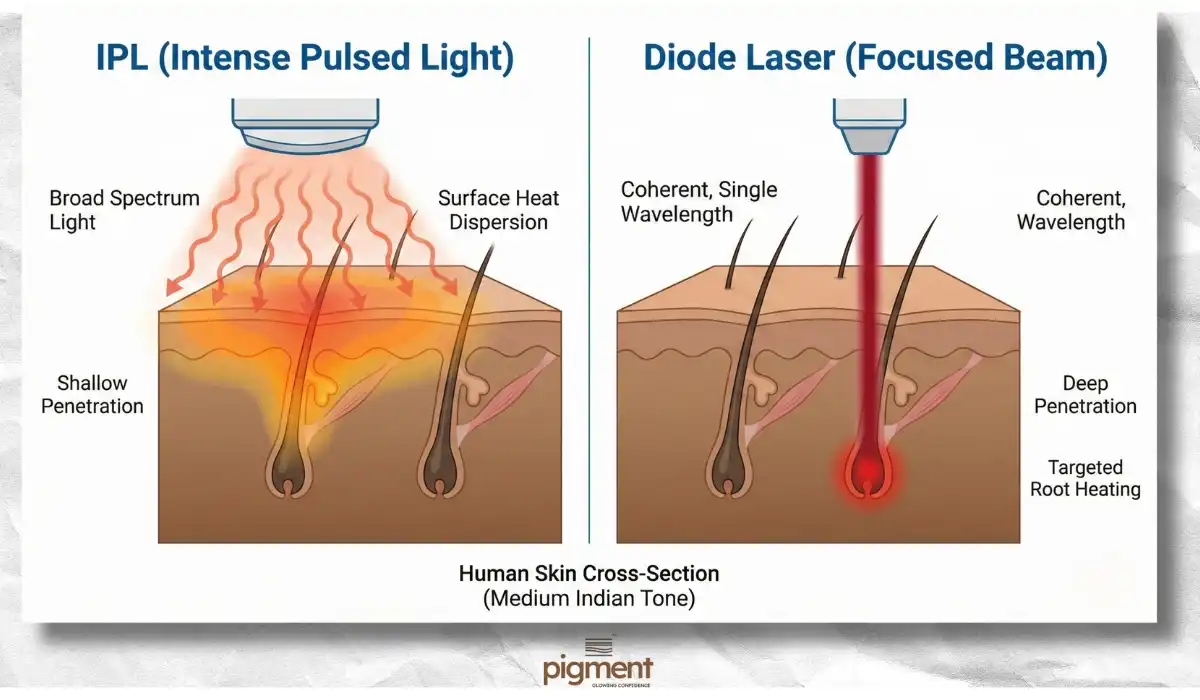
Medical diagram illustrating the difference between scattered IPL light versus focused diode laser hair removal technology penetrating the hair root in Indian skin.

To understand which machine is best, you first need to understand how laser hair removal works. The process uses a principle called Selective Photothermolysis. The laser beam targets the melanin (pigment) in your hair, travels down the hair shaft, and converts to heat at the root. This heat destroys the follicle’s ability to grow new hair.

Here is the challenge for Indian skin. Our skin is rich in melanin. If a laser cannot distinguish between the melanin in your hair and the melanin in your skin, it can cause burns or pigmentation changes. This is why you cannot just use any device. You need technology specifically engineered to protect the skin while aggressively targeting the hair.

1. IPL (Intense Pulsed Light): The “Flashlight” Technology

We need to start by clearing up the biggest misconception in the industry. IPL is not a laser.

Intense Pulsed Light uses a broad spectrum of light, similar to a powerful camera flash. It sprays light across the skin at multiple wavelengths rather than focusing a single, coherent beam. You will often see IPL technology in budget clinics and in popular at-home hair removal devices like the Ulike or Philips gadgets you see online.

Why IPL is rarely the best choice for permanent removal

Because the light is scattered, it lacks the “punch” to penetrate deep into the dermis where the hair root actually lives.

  • Shallow Penetration: Most of the energy is absorbed by the skin surface, not the root.
  • High Burn Risk: Because the light spreads out, it heats up the surrounding skin. For darker Indian skin tones, this significantly increases the risk of burns and hyperpigmentation.
  • Temporary Results: IPL essentially “stuns” the hair follicle. It might slow down growth for a few weeks, but the hair almost always grows back.

Many of our patients come to us after 10 or 15 cheap sessions elsewhere, frustrated by the lack of progress. When you calculate the cost of endless sessions that never truly work, the “cheap” option becomes surprisingly expensive. This long-term financial reality is exactly why we advise patients to look at laser hair removal cost in Bangalore as an investment in results, not just a price per session.

The Verdict on IPL: It is fine for fair skin or home touch-ups, but it is not a serious medical solution for permanent hair reduction on Indian skin.

2. Nd:YAG Laser (1064nm): The Old Guard for Safety

For decades, the Nd:YAG laser was the gold standard for treating darker skin types (Fitzpatrick IV-VI). It operates at a very long wavelength of 1064nm.

This long wavelength is its superpower. It bypasses the melanin in the upper layer of the skin completely and travels straight to the deep dermis. This makes it incredibly safe for very dark skin because it ignores the surface pigment.

The Problem with Nd:YAG

While safe, Nd:YAG laser hair removal has two significant drawbacks that have led newer technologies to overtake it:

  1. The Pain Factor: Because the energy travels so deep, the sensation is intense. Patients often describe it as a sharp, snapping rubber band. It is widely known as the most painful of the laser technologies.
  2. Ineffective on Fine Hair: The 1064nm wavelength loves thick, deep roots. However, it struggles to “see” finer, lighter hair often found on the face or arms.

The Verdict on Nd:YAG: It is a safe and capable technology, but you no longer have to endure that level of discomfort to get safe results.

3. Diode Laser (810nm): The Modern “Gold Standard”
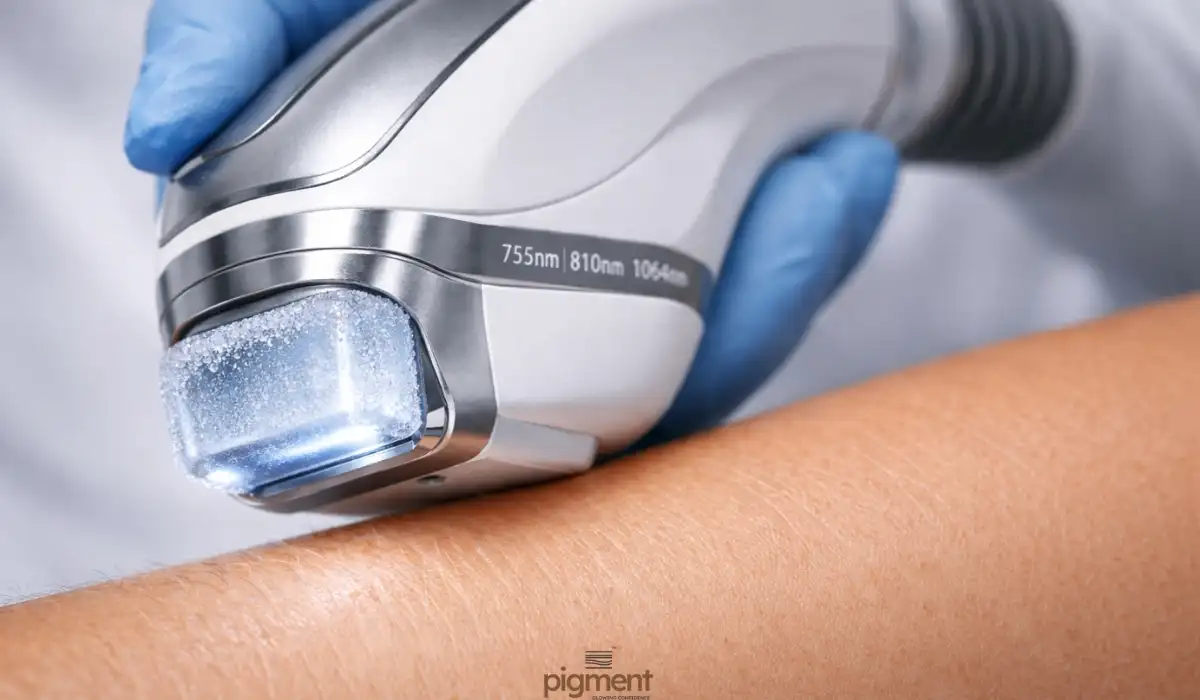
Close-up view of a medical-grade triple wavelength laser hair removal handpiece used for fast, in-motion treatments.

If you ask most dermatologists what the best laser hair removal technology is today, they will likely point to the Diode laser.

Operating at 810nm (or 808nm), the Diode laser sits in the perfect “sweet spot” of the light spectrum. It is deep enough to target the hair root safely without damaging the skin surface, but it has a high enough absorption rate to aggressively destroy the melanin in the follicle.

Why Diode works for Bangalore

The versatility of diode laser hair removal makes it ideal for the diverse range of skin tones we see in Bangalore.

  • Speed and Comfort: Modern Diode machines use “In-Motion” technology. Instead of the old “stamp and zap” method which was slow and painful, the handpiece glides continuously over the skin. This allows us to treat large areas like legs or backs in minutes, not hours.
  • Thick and Thin Hair: Unlike YAG, Diode is excellent at picking up medium-to-fine hair while still obliterating thick growth.

This capability is particularly important for our male patients. Men often have much denser, coarser hair growth on the back and chest. The Diode laser’s ability to handle this density without overheating the skin makes it the preferred choice for laser hair removal for men in Bangalore.

4. The Future is Here: Triple Wavelength Technology

The latest laser hair removal technology has moved beyond choosing just one wavelength. The most advanced medical-grade machines now utilize Triple Wavelength technology.

This involves a handpiece that fires three different laser wavelengths simultaneously in a single pulse:

  1. Alexandrite (755nm): Powerful absorption for treating fine, light hair.
  2. Diode (810nm): The classic wavelength for speed and deep root destruction.
  3. Nd:YAG (1064nm): Added safety for darker skin tones and deep penetration.

Why this is a game-changer

By combining all three, you get the safety profile of the YAG, the speed of the Diode, and the fine-hair targeting of the Alexandrite. This allows us to treat a patient who has a wheatish complexion (needing safety) but fine arm hair (needing Alexandrite) with a single machine. It is currently the most sophisticated approach available.

This technology is especially crucial for the face, where hair can be hormonal and stubborn. When treating visible areas, we always prioritize this multi-layered approach to ensure permanent facial hair removal is safe for Indian skin.

Hate the "Rubber Band" Snap?

You don't have to suffer for smooth skin. Our -5°C Ice Tip makes treatment virtually painless. Experience it for free before you pay a single rupee.

Book Free Ice-Laser Patch Test

The “Ice” Factor: Why Cooling is Non-Negotiable
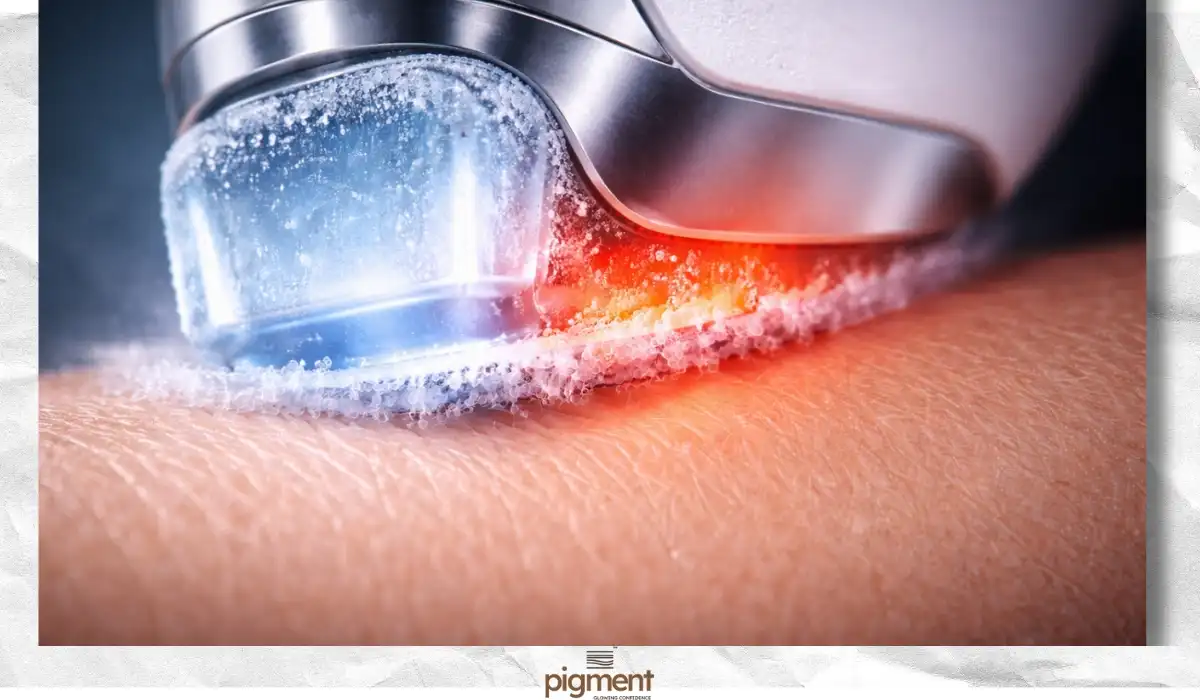
Macro shot showing the frosty sapphire tip of an ice diode laser, demonstrating contact cooling technology for painless hair removal.

You can have the best laser in the world, but if the cooling system is weak, the treatment will be painful and risky.

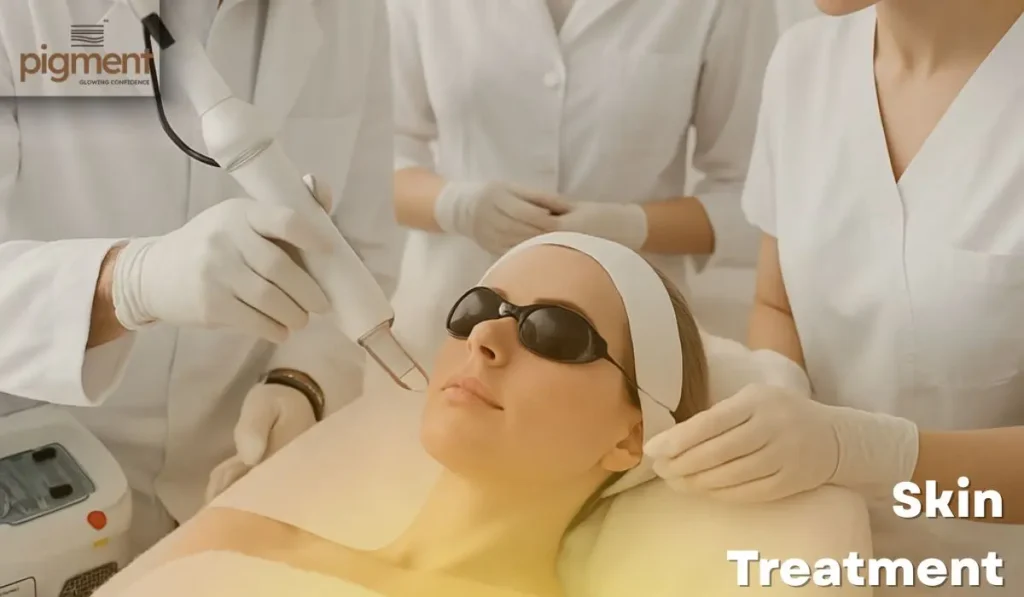
Top-tier machines (often marketed as ice diode laser or similar) feature Contact Cooling. This means the sapphire tip of the laser is chilled to a freezing -5°C or lower. When this cold tip touches your skin, it numbs the surface instantly before the laser energy fires.

This does two things:

  1. It makes the treatment virtually painless. Most patients feel only a warm massage sensation.
  2. It prevents pigmentation. Heat on the skin surface is what causes dark spots. By keeping the surface freezing cold, we protect the melanin in your skin.

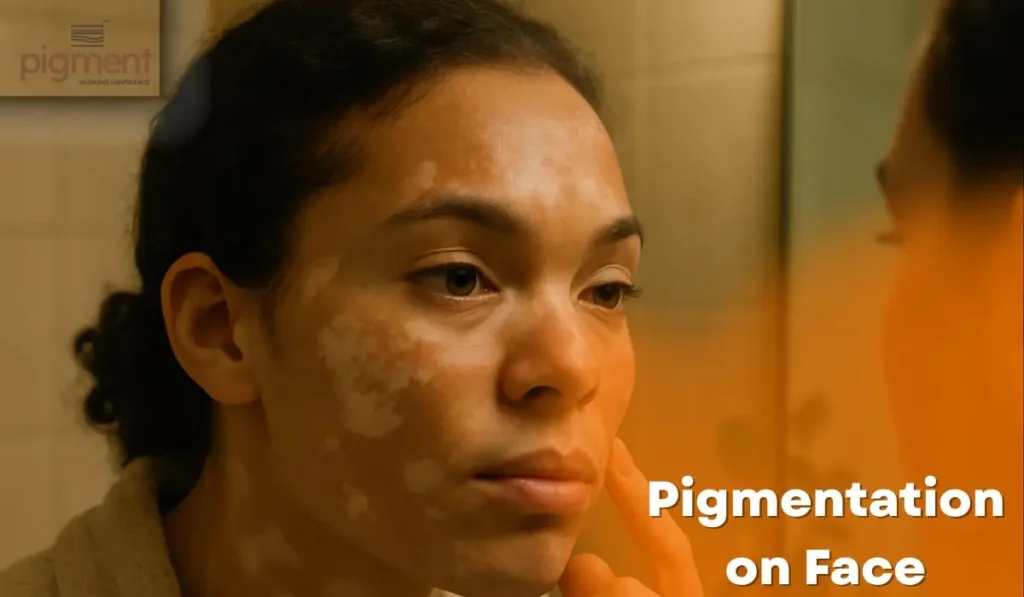
If you have sensitive skin or are prone to dark spots, relying on a machine with superior cooling is essential. We often discuss this in our guide to understanding and managing pigmentation, as heat-induced hyperpigmentation is a common side effect of cheap, hot lasers.
Summary: Comparing the Technologies

Here is a quick reference guide to help you evaluate clinics during your research.

Feature

IPL (Old/Home Tech)

Nd:YAG (Traditional)

Diode / Triple Wave (Modern)

Technology Type

Scattered Light (Not a laser)

Focused Laser (1064nm)

Focused Laser (810nm+)

Pain Level

High (Hot snap)

High (Sharp snap)

Low (Warm massage)

Safety for Dark Skin

Low

High

High

Typical Sessions

12+ (Often regrows)

8-10

6-8

Best For

Fair skin, home use

Very dark skin

All Indian skin types

Not Sure Which Laser Suits Your Skin?

Indian skin requires specific care to avoid burns and pigmentation. Don't guess. Chat with our experts to find the safest option for your specific skin tone and hair type.

Ask an Expert on WhatsApp

How to Choose the Right Clinic

Knowing the technology is half the battle. The other half is choosing a provider who knows how to use it. A powerful machine in inexperienced hands can still be dangerous.

When you call a clinic, do not just ask “How much is it?” Ask them:

  • “What specific technology do you use? Is it IPL or Diode?”
  • “Does your machine use triple wavelength technology?”
  • “How does the cooling system work?”

Asking these technical questions is one of the biggest green flags when choosing a skin clinic in Bangalore. Pigment Skin & Hair Clinic will be happy to explain our technology to you.

Final Thoughts

We understand that the upfront cost of laser hair removal can seem daunting compared to a monthly waxing bill. But when you factor in the permanence of the results, the time saved, and the freedom from ingrown hairs, the value becomes clear. In fact, many of our clients tell us that the relief from painful waxing is the main reason why Bengaluru is switching to laser hair removal.

Don’t settle for “flashlight” treatments that promise the world but deliver temporary results. Your skin deserves the safety and efficacy of medical-grade technology.

Still not sure which laser is right for you?

The best way to know is to feel it. Book a consultation and a patch test with us today. We will assess your hair type, explain the technology, and let you experience the comfort of a modern Diode laser firsthand.

Frequently Asked Questions (FAQ)

Q1. Which is better, Diode or Nd:YAG for Indian skin?

Ans: For most Indian skin tones, the Diode laser (specifically 810nm) is preferred. It offers a better balance of results and comfort compared to Nd:YAG. However, newer machines that combine Diode and Nd:YAG (Triple Wavelength) offer the best of both worlds.

Q2. Is IPL good for hair removal?

Ans: IPL is generally less effective than diode laser hair removal for permanent reduction. It is considered a “hair reduction” technology rather than permanent removal. It also carries a higher risk of burns on darker skin tones compared to diode lasers.

Q3. Does laser hair removal work on gray or white hair?

Ans: No laser technology currently works effectively on gray, white, or very blonde hair. This is because lasers target melanin (pigment), and these hair colors lack sufficient pigment to absorb the laser energy.

Q4. Is the Triple Wavelength laser painful?

Ans: No. Because these machines utilize advanced contact cooling (Ice technology), the skin remains numb and cool throughout the treatment. Most patients describe it as a comfortable, warm sensation, making it far less painful than waxing or older laser types.

Q5. Can I use at-home laser devices like Ulike?

Ans: At-home devices primarily use IPL technology, not diode laser. While they can be safe for maintenance, they are significantly less powerful than medical-grade machines and will not achieve the same permanent results. They also require much more frequent usage to see any difference.

Scroll to Top